Dallas, Texas, may be famous for cowboy hats, football, and barbecued brisket, but to me, it’s also a city with a beating cultural heart—one that pulses through its museums. The museums here are not just quiet halls filled with art or artifacts; they’re vibrant spaces where Texas-sized creativity meets international perspectives.
I spent several days exploring Dallas’s cultural treasures, and I want to share my journey—complete with personal highlights, practical travel tips, and even the little quirks that make these museums unforgettable. If you’re planning a trip, consider this your ultimate insider guide.
The Dallas Museum of Art (DMA)
📍 Location: 1717 N Harwood St, Dallas, TX 75201
🕒 Hours: Tue–Wed 11 am–5 pm, Thu 11 am–9 pm, Fri–Sun 11 am–5 pm (Closed Monday)
💵 Tickets: General admission is free, but special exhibitions usually cost $10–$20.
🎟️ Booking: Free timed-entry tickets available on dma.org or on-site.
The Dallas Museum of Art, or DMA, is one of those places where you could spend an entire day and still feel like you’ve barely scratched the surface. With over 24,000 works spanning 5,000 years of history, it felt like walking through a time machine designed by a painter.
My Three Personal Favorites at the DMA
- Claude Monet’s “Water Lilies” (1908)
Standing in front of this dreamy painting, I felt like the museum lights melted into soft morning fog. The brushstrokes are so alive you almost expect ripples in the water. After seeing it in art history textbooks for years, I nearly gasped aloud—yes, it’s cliché, but goosebumps don’t lie. - “The Icebergs” by Frederic Edwin Church (1861)
This monumental painting nearly dwarfed me. It’s massive, luminous, and so detailed I found myself lost in the icy cracks of blue. For a Texan summer day, standing here felt like stepping into the Arctic. - African Headrest Collection (19th century)
I stumbled into the African art wing almost by accident, but the carved wooden headrests mesmerized me. They were intimate, personal objects turned into art—reminding me that beauty exists in everyday life.
Three Works I Recommend You Shouldn’t Miss
• Jackson Pollock’s “Cathedral” (1947) – chaotic, dripping energy that almost vibrates off the wall.
• Ancient Greek Gold Jewelry (4th century BCE) – delicate, dazzling craftsmanship.
• Diego Rivera’s “Young Girl with Mask” (1939) – bold, colorful, and distinctly Mexican in spirit.
Pros & Cons
✅ Pros: Free admission, diverse collection, excellent late-night Thursdays with music & food trucks.
❌ Cons: Can get crowded during weekends; café prices are on the high side.
Travel Tips
• Transport: The DMA is in the Dallas Arts District, easily reached via DART Light Rail (Pearl/Arts District Station).
• Discounts: Special exhibits sometimes free on Thursdays after 5 pm.
• Pro tip: Grab tickets online in advance, especially for blockbusters.
The Sixth Floor Museum at Dealey Plaza
📍 Location: 411 Elm St, Dallas, TX 75202
🕒 Hours: Daily 10 am–6 pm
💵 Tickets: $18 adults, $16 seniors (65+), $14 youth (6–18), free under 5.
🎟️ Booking: Reserve via jfk.org.
Few museums hit me as emotionally as the Sixth Floor Museum. Located in the former Texas School Book Depository, this is where Lee Harvey Oswald fired the shots that assassinated President John F. Kennedy in 1963. Walking through, I felt a weight in my chest—a mix of sorrow, curiosity, and awe at standing in such a historically charged place.
My Three Personal Favorites
- The Recreated Sniper’s Nest
Seeing the window corner recreated exactly as it was on November 22, 1963, gave me chills. The stacked boxes, the angle of the view toward Dealey Plaza—it’s haunting and unforgettable. - Life Magazine Covers of JFK (1960s)
These glossy images, frozen in time, reminded me how deeply JFK captured American imagination. - The Zapruder Film Exhibit
This famous home movie footage is short but world-changing. Watching it in the very building where it was filmed nearby made my skin crawl.
Three Must-See Exhibits
• Kennedy’s Legacy Gallery – highlights civil rights and space exploration.
• The Audio Tour – narrated with firsthand accounts; worth every second.
• Dealey Plaza Overlook – step outside and view the “X” marking where JFK was struck.
Pros & Cons
✅ Pros: Immersive storytelling, powerful history, excellent audio guide.
❌ Cons: Heavy subject matter (may not be suitable for young kids), no photography inside main exhibits.
Travel Tips
• Transport: Take DART to West End Station (10 min walk). Parking nearby is $10–$15.
• Discounts: Book online for $2 off; combo tickets available with Reunion Tower.
• Pro tip: Visit early morning to avoid long lines.
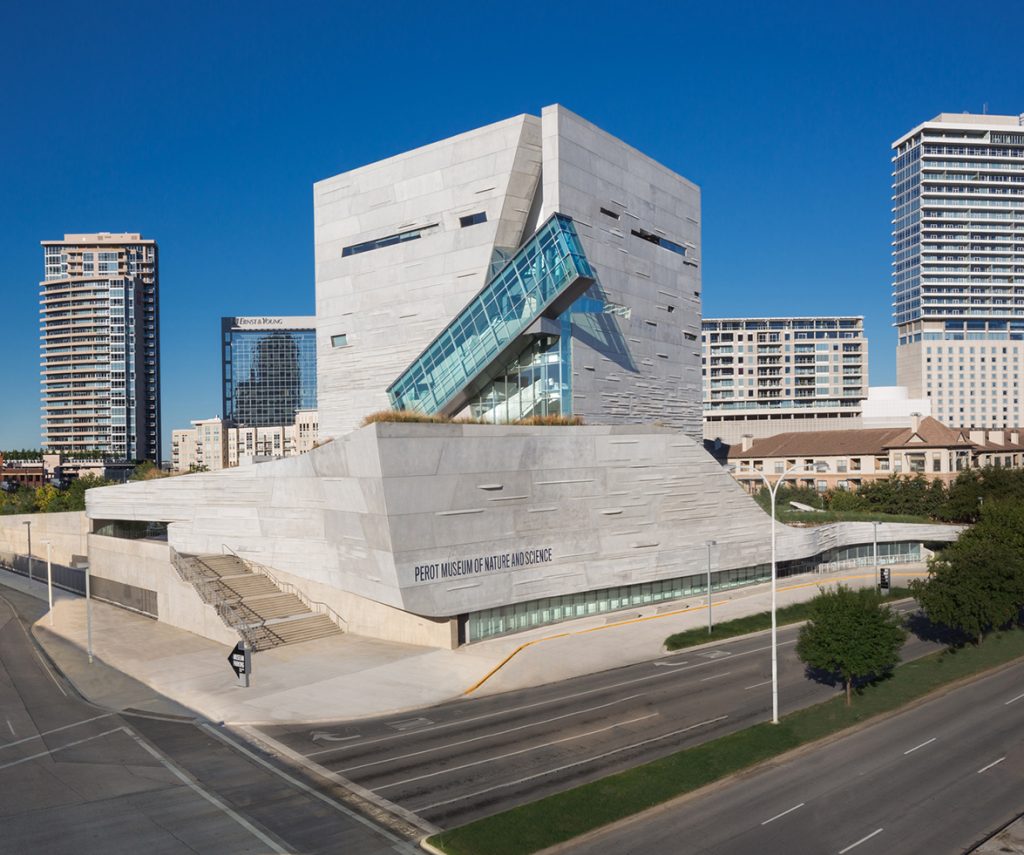
Perot Museum of Nature and Science
📍 Location: 2201 N Field St, Dallas, TX 75201
🕒 Hours: Mon–Sat 10 am–5 pm, Sun 11 am–5 pm
💵 Tickets: $25 adults, $15 youth (2–17), $18 seniors, under 2 free.
🎟️ Booking: Available at perotmuseum.org.
This museum is a wonderland for science geeks—and kids at heart like me. The building itself, designed by Thom Mayne, looks like a futuristic cube dropped into downtown.
My Three Personal Favorites
- The T. rex Skeleton
Towering, ferocious, and absolutely magnificent. I stood under its jaw and felt like a kid again, imagining Jurassic Park coming to life. - Earthquake Shake Simulator
I strapped in and suddenly felt the floor tremble. It was thrilling and terrifying—a reminder of nature’s power. - Gem and Mineral Hall
Sparkling amethysts, giant crystals, and a 1,400-carat topaz. Like walking into a cave designed by fairies.
Three Recommendations
• Sports Hall Motion Lab – track your running speed next to a cheetah (spoiler: you’ll lose).
• Journey Through the Solar System Exhibit – stunning visuals and interactive planets.
• 3D Theater – watch science films that make you feel like floating in space.
Pros & Cons
✅ Pros: Extremely interactive, perfect for families, modern design.
❌ Cons: Very busy on weekends; pricey food court.
Travel Tips
• Transport: Take DART to Victory Station (10 min walk).
• Discounts: Dallas CityPASS includes Perot + 3 more attractions (~$55).
• Pro tip: Buy timed-entry tickets; mornings are best.
Nasher Sculpture Center
📍 Location: 2001 Flora St, Dallas, TX 75201
🕒 Hours: Wed–Sun 11 am–5 pm
💵 Tickets: $10 adults, $5 students/seniors, free first Saturdays.
🎟️ Booking: Online at nashersculpturecenter.org.
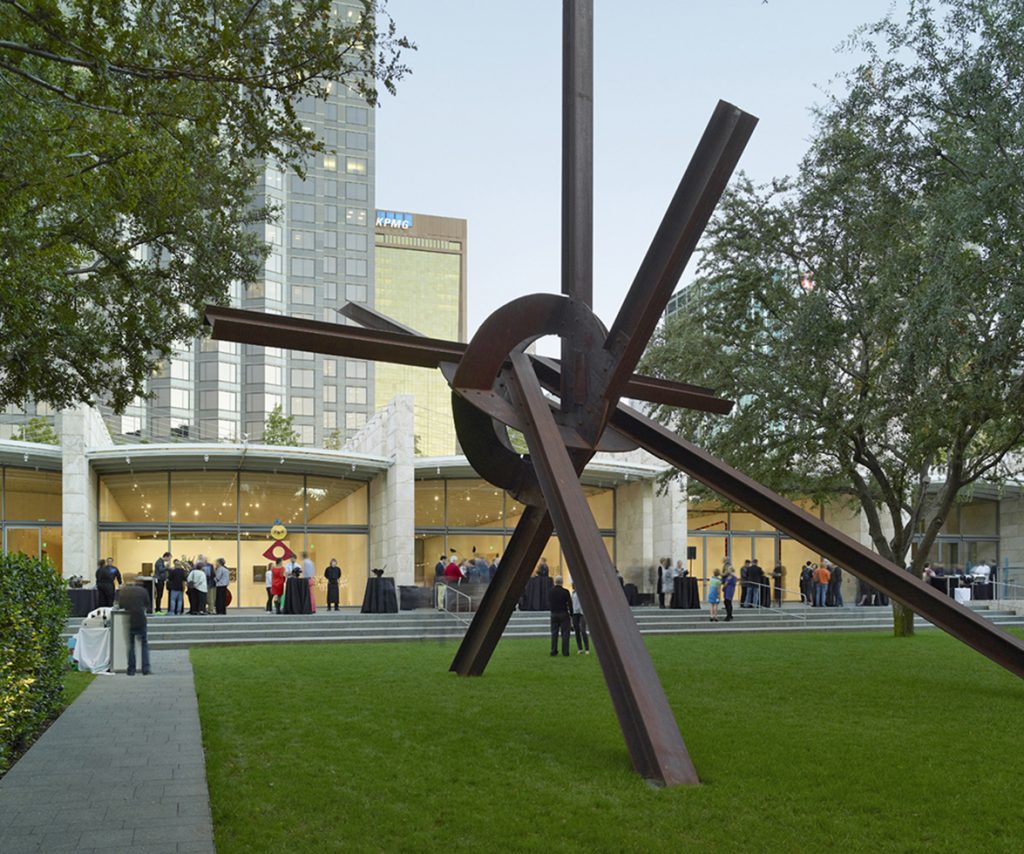
If the DMA is a symphony, the Nasher Sculpture Center is a jazz solo—intimate, playful, and deeply moving. Nestled in the Arts District, it’s a space dedicated entirely to modern and contemporary sculpture.
My Three Personal Favorites
- Auguste Rodin’s “The Age of Bronze”
So lifelike I half-expected the figure to breathe. Rodin’s mastery is beyond words. - Pablo Picasso’s “Head of a Woman”
A cubist masterpiece in three dimensions—angular, bold, and unforgettable. - Outdoor Sculpture Garden
Wandering under Texas skies, with giant sculptures peeking out between trees, felt like walking in a dream.
Three Recommended Works
• Joan Miró’s “Moonbird” – whimsical and joyful.
• Henry Moore’s Reclining Figures – monumental and serene.
• Richard Serra’s steel installations – massive, imposing, like walking through canyons of metal.
Pros & Cons
✅ Pros: Serene atmosphere, perfect mix of indoor/outdoor.
❌ Cons: Small collection; not ideal if you want a full-day museum.
Travel Tips
• Transport: Located near DMA, walkable from Pearl/Arts District DART station.
• Discounts: Free admission first Saturdays of every month.
• Pro tip: Combine with DMA for a perfect art-filled day.
Why Dallas Museums Belong on Every Traveler’s List
As I sat in my hotel room on my last evening in Dallas, sipping a local craft beer and flipping through the dozens of photos I had taken at the museums, I couldn’t help but feel that Dallas had given me something more than just “places to see.” It gave me stories to carry home, conversations to share with friends, and most importantly, moments where I felt connected—to history, to art, and even to my own curiosity.
I’ve always believed that museums are like time capsules of humanity. They hold our dreams, our mistakes, our brilliance, and even our tragedies. Dallas, in its uniquely Texan way, doesn’t just display these time capsules—it immerses you in them. At the Dallas Museum of Art, I didn’t just see a Monet—I felt the calm of the lily pond seep into my bones. At the Sixth Floor Museum, I didn’t just learn about JFK—I stood in the exact spot where the world changed in 1963. At the Perot Museum, I wasn’t just reading facts—I was laughing like a child as a simulated earthquake shook beneath my feet. And at the Nasher Sculpture Center, I wasn’t just admiring bronze and steel—I was walking among giants, in a garden where art and nature whispered together.
A Few Reflections and Practical Advice
If you plan your trip to Dallas, here are a few bigger-picture tips I wish someone had given me before:
• Balance your emotions. Some museums, like the Sixth Floor, are heavy and emotional. Pair them with something lighter, like Perot or Nasher, to keep the day uplifting.
• Take breaks outside. Dallas can be hot, and museum visits can be overwhelming. Thankfully, many museums are near Klyde Warren Park—a perfect spot to grab a taco from a food truck and recharge.
• Don’t overpack your schedule. I know it’s tempting to do three or four museums in one day. But trust me, you’ll appreciate each one more if you give yourself time to linger.
Why These Museums Left Such a Mark on Me
Every city has museums, but Dallas taught me something: it’s not about quantity, it’s about how deeply the stories resonate. I could feel the city’s pride in the DMA’s global collection, its grief and reflection in the Sixth Floor, its joy in discovery at the Perot, and its intimacy with beauty at the Nasher. Together, they form not just an itinerary but an emotional journey through art, history, science, and culture.
Traveling isn’t only about landscapes or food (though Dallas has plenty of both); it’s about moments that stick with you years later. I know that five years from now, I’ll still remember the goosebumps I felt looking through that infamous sixth-floor window, or the quiet joy of standing alone in front of Monet’s lilies.
So if you’re heading to Dallas, promise me this: don’t skip the museums. Whether you’re an art lover, a history buff, a science geek, or simply someone looking for inspiration, these institutions will give you more than just knowledge—they’ll give you experiences that shape the way you see the world.
Pack a good pair of walking shoes, book your tickets in advance, carry a notebook (trust me, you’ll want to jot down thoughts), and most of all—let yourself be open to wonder. Because in Dallas, the museums aren’t just buildings; they’re gateways to stories that you’ll carry long after your trip is over.
And as I boarded my flight home, I realized one thing: I didn’t just “visit” Dallas—I connected with it. And that’s the kind of journey every traveler dreams of.